New environmental regulations for the petroleum industry in Saudi Arabia are forcing changes to the design parameters of refining equipment.
This includes higher height requirements for flare stacks, the towers used to burn off flammable gas generated by the oil-refining process.
For heavy lift companies this is pushing the envelope on their equipment demands, illustrated by a recent lift at a Saudi Aramco facility in Yanbu by Gulf Haulage Heavy Lift (GHHL).
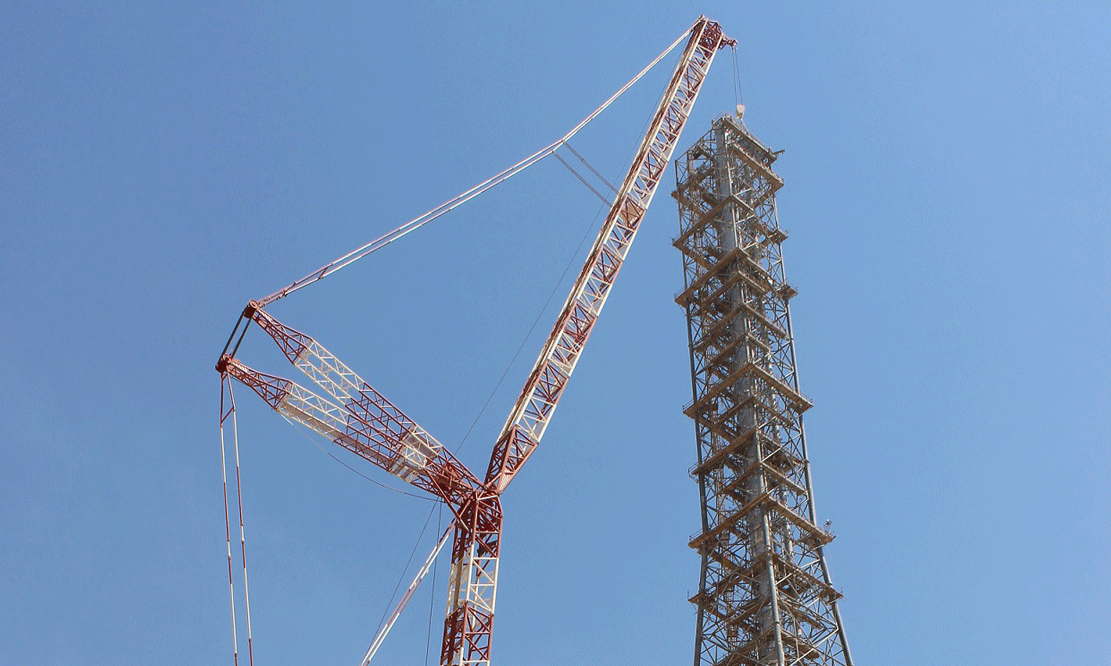
Saudi Aramco has installed the first flare stack under these new environmental guidelines at a Yanbu plant. The structure was built to a height of 200m, with stack structure segments weighing between 21 and 104 tonnes.
Due to the structure’s weight and height and coupled with difficult site conditions, GHHL chose to use its Terex CC 8800-1 crawler crane, which has a maximum lifting weight of 1,600t.
The crane was transported nearly 1,400 km from GHHL’s headquarters in Dammam, using a fleet of seven heavy duty trailers, 12 low-bed trailers and 40 flat-bed trailers.
The project was not without difficulties. The exposed position of the facility near the Red Sea meant that high winds were a factor, severely limiting the time crews had to complete each lift.
“Every day at approximately 11:00 hours winds would increase from a light breeze of 2m/s to sustained gusts reaching 16m/s, and this would sometimes continue all afternoon and evening,” said Sanjay Pachisia, general manager of GHHL.
Permissible lift wind-speed levels ranged from 4.1m/s to 7.1m/s, depending on which flare section was being positioned.
The project also required a low ground bearing pressure of 12t/m2 for constructing the crane’s boom configurations and lifting the flare stack.
“The CC 8800-1 crawler crane has 2m wide tracks and offers a wide 10.5m stance to help disburse the weight over a wide area for heavy lift projects,” says Christian Kassner, Senior Sales Manager for Terex Cranes.
This, along with thick steel matting, helped GHHL’s operators meet the project’s ground pressure requirements for the crane.
For the job, the CC 8800-1 was used in multiple boom and jib combinations, with the 108m main boom used for the lower level lift (of the heavier section), with the luffing jib added for the higher segments, configured for a system length of 216m.
“We chose the crane configurations carefully, in a way that the change consisted of only adding luffing jib boom sections and not change the main boom length,” said Pachisia.
In all, the Yanbu Aramco Sinopec Refinery Project required 11 working days to complete the six complex lifts to finish placing the flare stack segments. Once completed, crews disassembled the CC 8800-1 crane and mobilized it back to GHHL’s Dammam facility, a process that took approximately ten days.