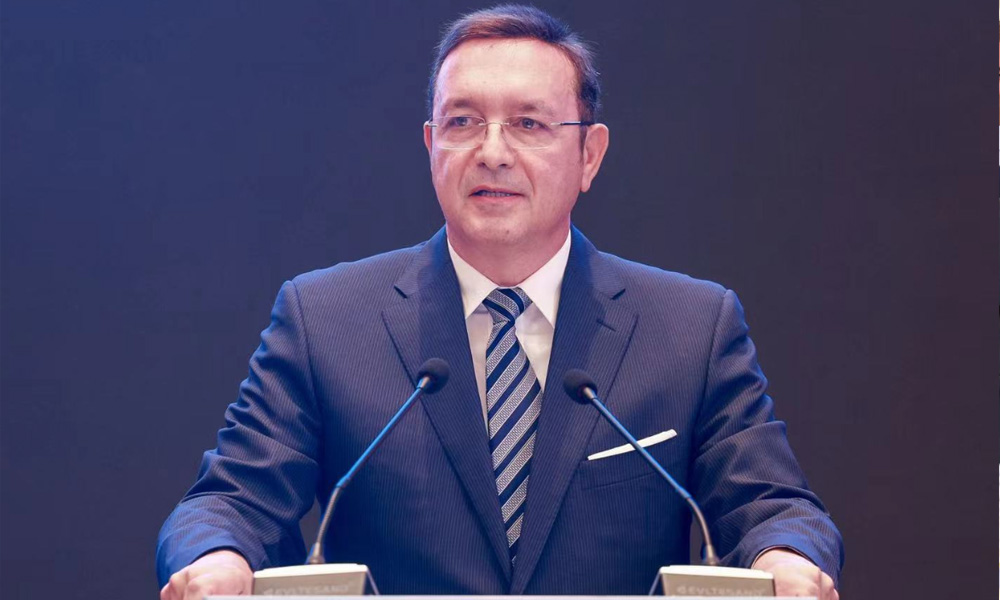
At the European Cement Decarbonisation Summit 2025 in Frankfurt, the World Cement Association (WCA) unveiled its vision for sustainable industry transformation. They also warned that cement prices could triple or quadruple under current European policies.
Speaking at the two-day conference, Emir Adiguzel, WCA Director, highlighted the key challenges facing the industry, such as rising energy costs, growing global overcapacity, and the effects of carbon pricing, while reaffirming the association’s commitment to representing independent cement producers worldwide.
“Cement prices will triple if not quadruple with these policies in Europe,” Adiguzel warned, highlighting the significant cost burden that decarbonisation measures will place on the construction sector and end consumers. The WCA noted that most carbon-related costs will be passed to consumers, with carbon pricing becoming a “selling imperative” for price increases across the industry.
The WCA’s latest analysis was presented, indicating that the cement sector will require US $200bn in investment by 2050 to fully decarbonise. Between 2019 and 2023, leading global firms reduced carbon intensity from an average of 700kg CO2/t to 640kg CO2/t, demonstrating that progress is achievable with the right support mechanisms.
While acknowledging that carbon capture projects “must continue if applied correctly”, he emphasised that these technologies will have a limited effect on global industry decarbonisation. Adiguzel’s presentation highlighted that current carbon capture technology requires investment exceeding the capital cost of an entire cement plant, with significant development still needed for scalability.
The WCA highlighted four key levers for decarbonisation that remain largely underutilised by the sector, including:
- Energy efficiency: Waste heat recovery, advanced process control, and AI optimisation
- Alternative fuels: Increased use of biogenic fuels and higher thermal substitution rates
- Reduced clinker factor: Adoption of LC3, natural pozzolans, and supplementary cementitious materials (SCMs)
- New technologies: Carbon capture and storage, electrification, and heat storage solutions
Adiguzel also raised concerns about the effectiveness of the EU’s Carbon Border Adjustment Mechanism (CBAM) in incentivising non-scheme exporters to reduce their carbon footprint, particularly given the expensive investments required. Adiguzel emphasised that the cement industry must engage actively with governments to promote policies that incentivise a healthy transition to a low-carbon, low-clinker future.
“Cement is an irreplaceable material, vital for the infrastructure that underpins a green economy. This journey will require more than just plans, it demands collaborative action across the entire value chain,” Adiguzel concluded.